

In this article12 sections
- 01Month 1–2 (Weeks 1–8): Confirmation and Baseline Health
- 02Month 2–3 (Weeks 9–13): Early Screening
- 03Month 4 (Weeks 14–17): Settling In
- 04Month 5 (Weeks 18–22): The Anomaly Scan
- 05Month 6 (Weeks 23–27): Glucose Screening
- 06Month 7 (Weeks 28–31): Third Trimester Begins
- 07Month 8 (Weeks 32–35): Preparing for Delivery
- 08Month 9 (Weeks 36–40): Weekly Monitoring
- 09A Quick Reference Checklist
- 10What If You Miss a Scheduled Checkup?
- 11Conclusion
- 12Book Your Next Pregnancy Checkup
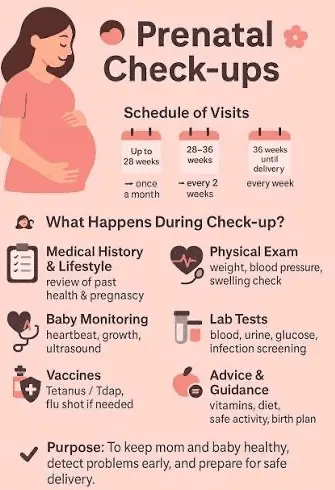
One of the most common questions new mothers-to-be ask is simple: "What happens at each checkup?" Pregnancy care follows a fairly predictable rhythm, with specific tests and scans clustered around certain months. Knowing this rhythm in advance can help you feel more prepared and less anxious at every visit.
Here is a month-by-month breakdown of what typically happens during a healthy, low-risk pregnancy. Your own schedule may vary slightly based on your doctor's recommendations and any individual risk factors.
Month 1–2 (Weeks 1–8): Confirmation and Baseline Health
This is when pregnancy is usually confirmed, either through a home test followed by a clinical visit, or directly at your doctor's office.
What typically happens:
- Confirmation of pregnancy through examination and sometimes a blood test
- Estimation of your due date based on your last menstrual period
- Blood tests for blood group, hemoglobin, thyroid, blood sugar, and infectious disease screening
- Starting folic acid supplementation, if not already started
- Discussion of your medical history and any existing conditions
Month 2–3 (Weeks 9–13): Early Screening
What typically happens:
- A dating ultrasound to confirm the pregnancy is developing normally and to verify the due date
- NT (nuchal translucency) scan, usually between weeks 11–13, to assess early risk of chromosomal conditions
- Continued monitoring of nausea, fatigue, and general wellbeing
- Guidance on early pregnancy nutrition and lifestyle adjustments
Month 4 (Weeks 14–17): Settling In
What typically happens:
- Routine checkup to monitor weight, blood pressure, and general health
- Discussion of any remaining symptoms from the first trimester
- Guidance on physical activity and continuing supplementation
Month 5 (Weeks 18–22): The Anomaly Scan
This is one of the most detailed scans of the entire pregnancy.
What typically happens:
- A detailed anomaly scan to examine the baby's brain, heart, spine, limbs, and other organs
- Determination of the baby's position and placental location
- In many cases, the baby's sex can be observed, though many parents choose not to find out
- Continued blood pressure and weight monitoring
Month 6 (Weeks 23–27): Glucose Screening
What typically happens:
- Screening for gestational diabetes, usually through an oral glucose tolerance test (OGTT)
- Routine monitoring of blood pressure and fetal heart rate
- Discussion of fetal movement patterns as they become more noticeable
- Tetanus vaccination, if due at this stage
Month 7 (Weeks 28–31): Third Trimester Begins
Visits typically increase to every two weeks from this point.
What typically happens:
- Growth scan to check the baby's size and amniotic fluid levels
- Blood tests to recheck hemoglobin levels, as anemia risk increases later in pregnancy
- Discussion of preterm labour warning signs
- Continued monitoring of blood pressure for signs of preeclampsia
Month 8 (Weeks 32–35): Preparing for Delivery
What typically happens:
- More frequent visits, often every two weeks
- Assessment of the baby's position (head-down, breech, or transverse)
- Discussion of birth plan preferences and delivery options
- Monitoring for swelling, blood pressure changes, and fetal movement
Month 9 (Weeks 36–40): Weekly Monitoring
What typically happens:
- Weekly checkups to closely monitor the baby's position, heart rate, and your overall readiness for labour
- Group B Streptococcus (GBS) screening, if recommended
- Cervical assessment closer to the due date
- Final discussion of labour signs, hospital bag preparation, and when to come in for delivery
A Quick Reference Checklist
- Weeks 6–8: Confirmation visit and first blood tests
- Weeks 11–13: NT scan
- Weeks 18–22: Anomaly scan
- Weeks 24–28: Glucose screening (OGTT)
- Weeks 28 onward: Visits every 2 weeks
- Weeks 36 onward: Weekly visits until delivery
Tip: Keep a small notebook or phone note listing questions as they come to mind between appointments. It's easy to forget them in the moment, and no question is too small to ask your doctor.
What If You Miss a Scheduled Checkup?
Life happens, and sometimes appointments get missed. If this happens, don't skip it entirely — call your hospital to reschedule as soon as possible rather than waiting until your next planned visit, especially during the second and third trimesters when timely screening matters most.
Conclusion
Pregnancy checkups follow a clear, well-established rhythm designed to catch potential issues early and keep both mother and baby healthy. Knowing what to expect at each stage can turn each visit from a source of anxiety into a reassuring checkpoint in your journey.
Book Your Next Pregnancy Checkup
Whichever month you're in, the antenatal team at Chaitanya Hospital, Kadapa is ready to guide you through every scan, test, and milestone with care and clarity. Book an appointment today to stay on track with your pregnancy checkups.
Please note. This article is for general awareness and is not a substitute for a doctor’s advice, diagnosis or treatment. If you are worried about your health, or in an emergency, call +91 944 103 0587 or visit the hospital.