

In this article8 sections
Breastfeeding is often described as natural, and while it is, that doesn't always mean it comes easily. Many new mothers face real challenges in the early weeks — latch difficulties, uncertainty about supply, and physical discomfort — before things start to feel more manageable. Understanding the genuine benefits of breastfeeding, alongside realistic expectations and support, can make this stage feel far less discouraging.
Benefits for the Baby
Optimal Nutrition
Breast milk contains a precisely balanced combination of proteins, fats, vitamins, and antibodies suited to a newborn's needs, and its composition even adjusts over time to match the baby's changing requirements.
Immune Support
Breast milk contains antibodies that help protect newborns from infections during a period when their own immune system is still developing. This is particularly valuable in the first few months of life.
Reduced Risk of Certain Illnesses
Research links breastfeeding with a reduced risk of respiratory infections, ear infections, and gastrointestinal illnesses in infancy, along with some longer-term health benefits.
Digestive Comfort
Breast milk is generally easier for newborns to digest compared to formula, which can mean less gas and digestive discomfort for some babies.
Benefits for the Mother
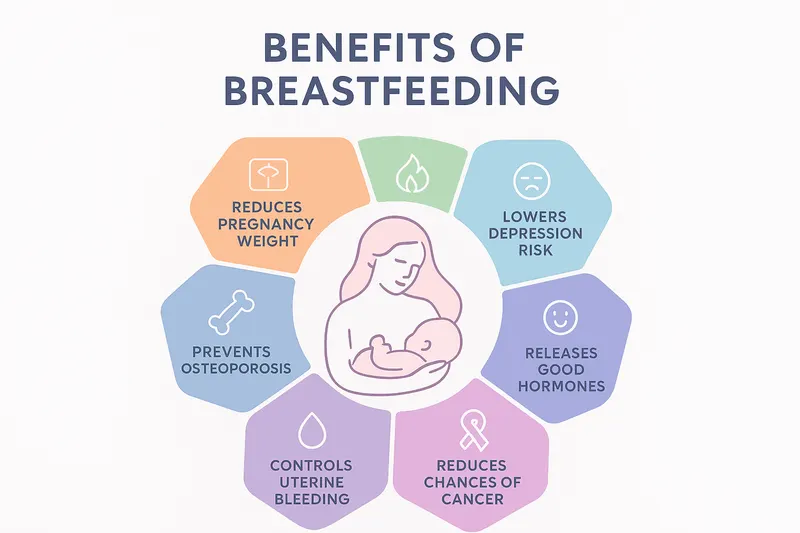
Faster Uterine Recovery
Breastfeeding stimulates the release of oxytocin, a hormone that helps the uterus contract back toward its pre-pregnancy size more quickly, which can also help reduce postpartum bleeding.
Reduced Long-Term Health Risks
Breastfeeding has been associated with a reduced risk of certain conditions later in life, including some types of breast and ovarian cancer, though it is just one of many contributing factors to overall long-term health.
Bonding
The physical closeness and skin-to-skin contact during breastfeeding supports emotional bonding between mother and baby, which benefits both emotional wellbeing and, in many cases, breastfeeding success itself.
Convenience Over Time
Once established, breastfeeding requires no preparation, sterilization, or purchasing of formula, which many mothers find convenient, particularly for nighttime feeds.
Common Early Challenges (And Why They're Normal)
- Latch difficulties — it can take time for both mother and baby to find a comfortable, effective latch
- Sore nipples — common in the first one to two weeks as your body adjusts
- Engorgement — breasts can feel overly full, particularly as milk supply is being established
- Uncertainty about supply — many mothers worry their baby isn't getting enough, even when feeding is going well
These challenges are extremely common and rarely mean breastfeeding "isn't working." Support from a lactation-aware doctor or nurse in the early days can make a significant difference in resolving these issues.
Practical Tips for a Smoother Breastfeeding Journey
- Feed on demand in the early weeks, rather than adhering strictly to a fixed schedule
- Ensure a deep, comfortable latch, which reduces nipple soreness and supports effective feeding
- Stay hydrated and eat nutritious meals, as breastfeeding does increase caloric and nutrient needs
- Alternate breasts during feeds to maintain balanced milk supply
- Watch for hunger cues — rooting, hand-to-mouth movements, and lip-smacking — rather than waiting for crying, which is a later hunger sign
- Seek help early if you experience persistent pain, cracked or bleeding nipples, or concerns about supply
Tip: A good latch should not cause ongoing pain beyond the first few seconds. Persistent pain throughout a feed is usually a sign the latch needs adjustment, not something to simply endure.
When Breastfeeding Isn't Possible or Chosen
Not every mother is able to breastfeed, whether due to medical reasons, supply challenges, or personal choice — and formula feeding is a safe, nutritionally complete alternative. What matters most is that the baby is fed, growing well, and that the parent feels supported in whichever choice is right for their situation, without unnecessary guilt.
How Long Should Breastfeeding Continue?
Many health guidelines recommend exclusive breastfeeding for the first six months, followed by continued breastfeeding alongside solid foods for at least the first year, or as long as mutually desired by mother and baby. This timeline is a general guideline, and individual circumstances often shape what's realistic and appropriate for each family.
Conclusion
Breastfeeding offers real, well-documented benefits for both mother and baby, but it's rarely instantly effortless. With patience, the right support, and realistic expectations, most early challenges can be worked through — and for mothers who choose or need a different path, formula feeding remains a safe and nourishing alternative.
Get Breastfeeding Support
Our maternity and neonatal care team at Chaitanya Hospital, Kadapa is here to support you through every stage of breastfeeding, from the very first latch onward. Book an appointment today if you have questions or need guidance.
Please note. This article is for general awareness and is not a substitute for a doctor’s advice, diagnosis or treatment. If you are worried about your health, or in an emergency, call +91 944 103 0587 or visit the hospital.